
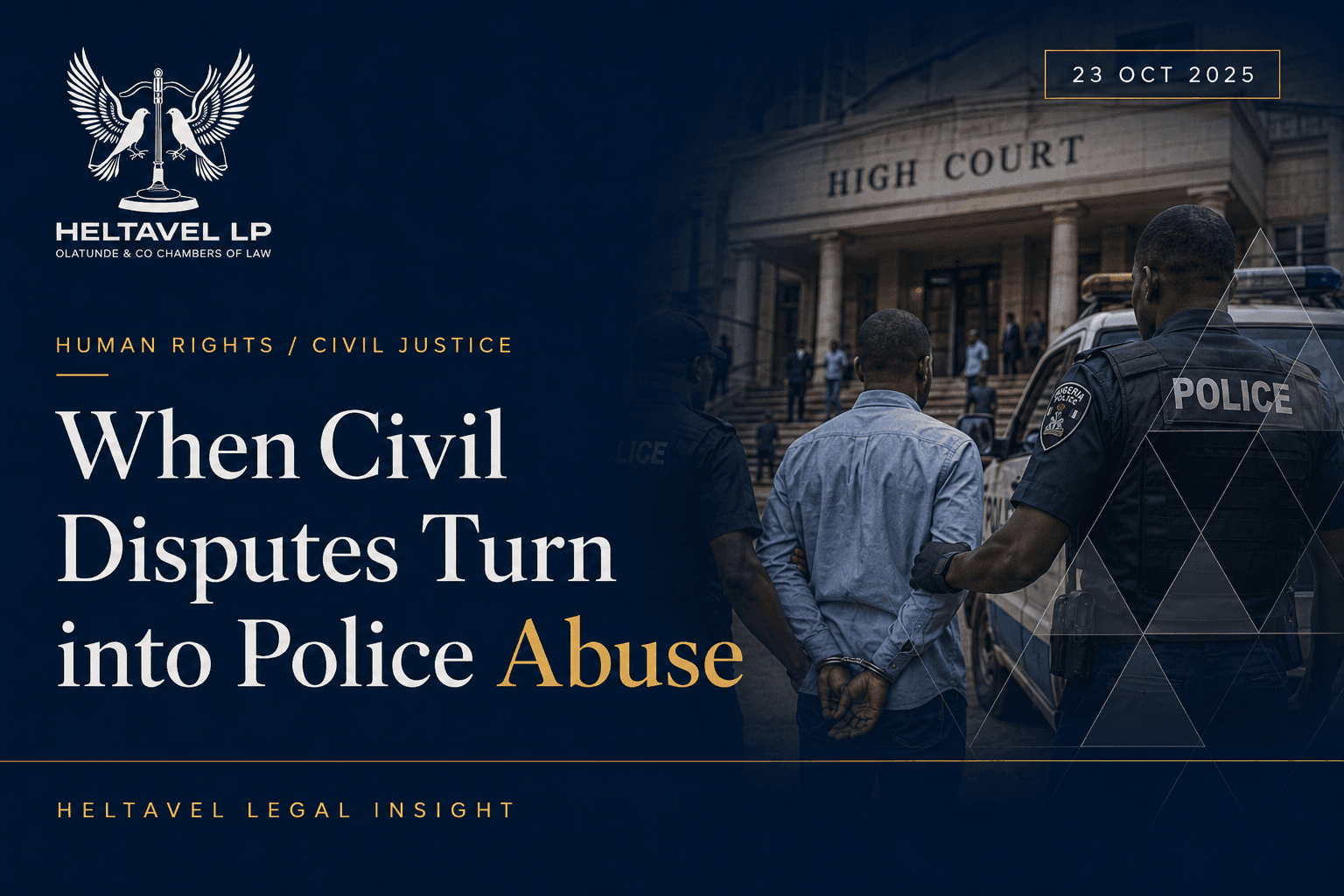
Human Rights/Civil Justice
When Civil Disputes Turn Into Police Abuse
The reported arrest of activist Omoyele Sowore over issues tied to a civil court order raises a basic but important legal question: can the police be used to enforce civil court orders? The short answer is no, at least not as a primary enforcement mechanism in ordinary civil disputes.
In Nigeria, the police are principally empowered to prevent and detect crime, preserve law and order, and protect life and property. Their role is rooted in criminal law enforcement and public safety. Civil disputes, on the other hand, follow a different legal process. Where a court gives a civil judgment or order, the proper mechanism for enforcement is usually through the court’s recognised enforcement structure, including court bailiffs, sheriffs, and other lawful execution processes.
That distinction matters.
A civil court order is not a criminal warrant. It does not automatically authorise the police to arrest a person merely because one party alleges non-compliance. In most cases, where a party disobeys a civil order, the proper remedy is to return to court for enforcement steps such as execution proceedings or, where appropriate, contempt proceedings. Using the police to arrest or intimidate a party in a civil matter risks turning a legal process into unlawful coercion.
This is not a small procedural issue. It goes directly to constitutional rights.
Under Nigerian law, the right to personal liberty is protected. An arrest must have a lawful basis. Where police powers are deployed in matters that are essentially civil in nature, especially to pressure, threaten, or punish a party outside the proper legal process, such use of force may amount to an abuse of office and a violation of rights. Courts in Nigeria have repeatedly frowned on the use of the police as debt collectors, recovery agents, or private tools in civil disputes.
That principle is well known: the police are not a substitute for civil enforcement procedures.
It is also important to understand why this line must remain clear. Once the police are allowed to enforce civil claims outside proper judicial execution, powerful individuals and institutions can weaponise state force against weaker parties. A breach of contract, property disagreement, or disobedience of a civil directive could then be wrongly converted into a police matter. That is dangerous. It undermines both the rule of law and public confidence in law enforcement.
If the facts reported are accurate, the arrest of Sowore would raise serious concerns because the enforcement of a civil order should proceed through lawful court channels, not through police-driven self-help. The moment a civil grievance is handed to the police for arrest and intimidation, the law is no longer being enforced properly, it is being bypassed.
The better legal position is straightforward:
Civil orders should be enforced through court-sanctioned civil processes Police powers should not be used to settle or enforce private civil claims Disobedience of a civil order should be addressed by the court, not by unlawful arrest Any abuse of police power in this context may give rise to constitutional and civil claims
At a broader level, this issue is a reminder that legality is not only about having an order, it is about using the right process. Even where a party believes a court order has been violated, the answer is not to convert that dispute into a police operation.
Need legal guidance?
Contact Heltavel Legal to discuss your specific matter.